
Behold —
The Kingdom of God
is at Hand.
A serious, biblically-anchored study of the Tabernacle of Moses, the body of Christ, and the architecture of the Kingdom.

See the Tabernacle before you read it.
A 3D walkthrough of the structure God spent more of the Torah describing than creation itself, by the teaching channel Messages of Christ. Watch it, then take a sheet of paper and draw it yourself.
“Tabernacle of Moses Construction 3D Animation | Exodus 25-30” — video by Messages of Christ, used with thanks. Watch it on YouTube.
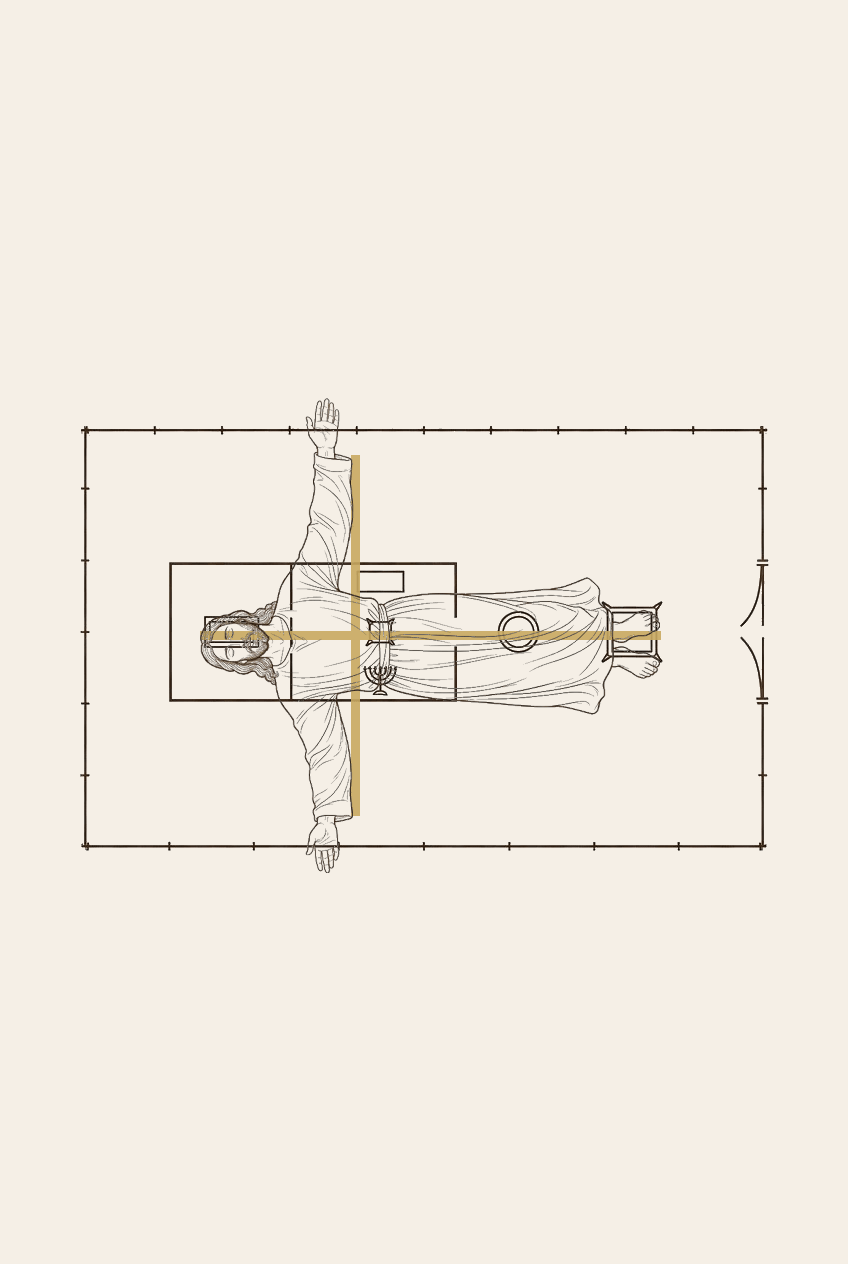
Lay the cross inside the floor plan.
Head in the Holy of Holies. Arms outstretched through the Holy Place. Feet at the bronze altar. The Tabernacle was never only a tent — it is the body of Christ, drawn in cubits fourteen centuries before He was born.
This single drawing is chapter one of Book One. The remaining forty-seven chapters walk every correspondence it contains.
A picture God drew before the
foundation of the world.
Most readers of the Bible eventually hit the same wall — the long descriptions of the Tabernacle of Moses in the book of Exodus. Page after page of curtain dimensions, gold rings, acacia poles. The bookmark stays for weeks. The reading plan quietly dies.
But God spent more of the first five books of the Bible on the Tabernacle than on any other subject — including creation itself. When you slow down, the measurements start to speak. The materials start to preach. And the story they tell is the story of Jesus.
Take a sheet of paper. Draw the floor plan. Then lay the cross of Jesus inside it — His feet at the bronze altar, His head in the Holy of Holies, His heart at the place of meeting. What takes shape is not a theological diagram. It is the map of the Kingdom.
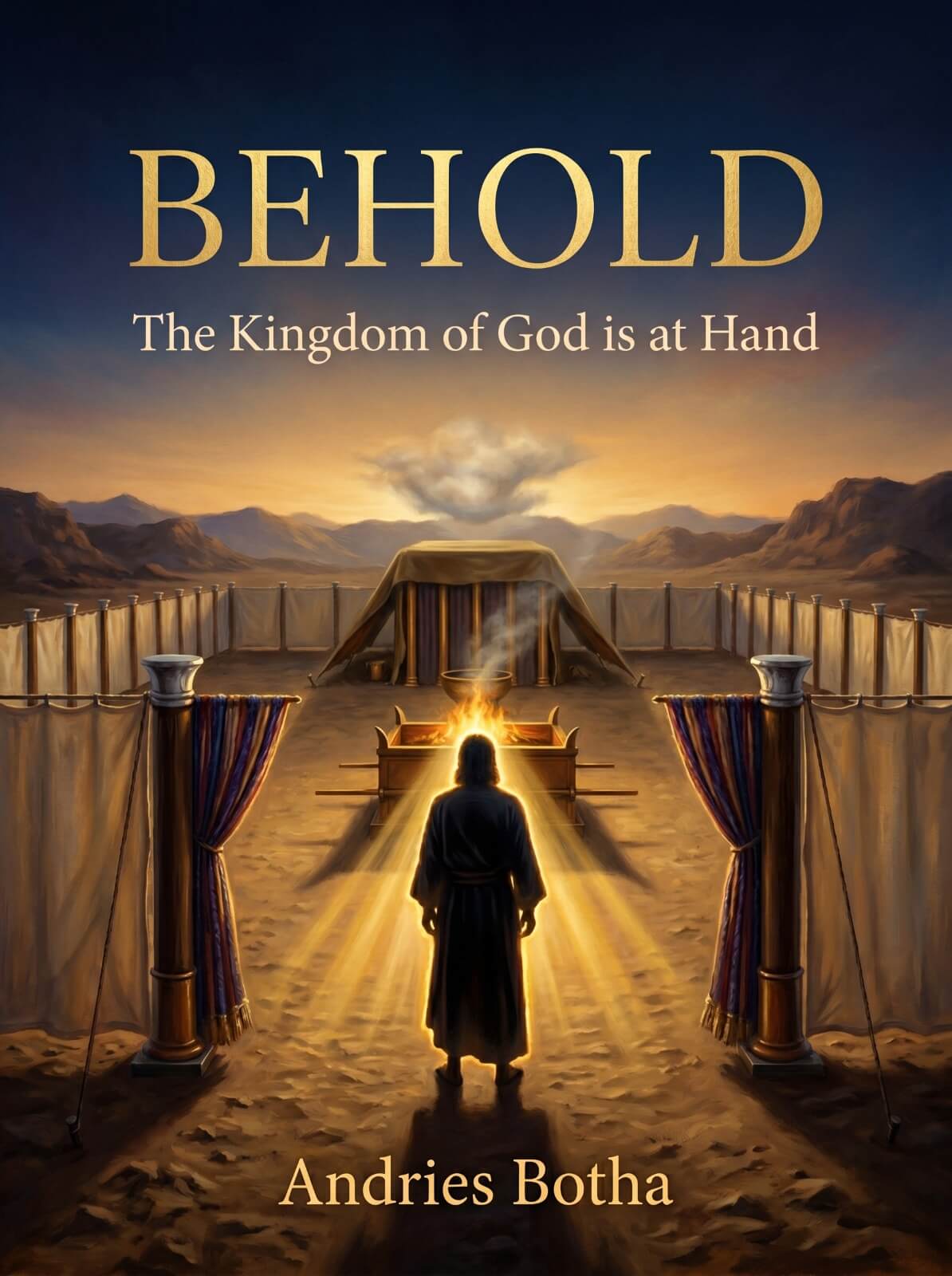
Behold
The first volume of a four-book series.
Behold lays the body of the crucified Christ across the floor plan of the Tabernacle and walks the reader, piece by piece, through the correspondences. Forty-eight short chapters. Seven parts. One unforgettable picture.
174 Pages · 48 Chapters · 7 Parts
- i. Maps the seven I AM declarations to the Tabernacle furniture they fulfil.
- ii. Traces the Hebrew word zeela through Adam, the Tabernacle and the pierced side of Christ.
- iii. Distinguishes salvation at the gate from redemption in the Tent — pastorally and biblically.
- iv. Built for personal reading and small-group study, with reflection questions in every chapter.
One revelation, four progressive depths.
at Hand
The Foundation Volume
at Heart
The Inward Vision
is You
The Indwelling
With You
The Capstone
For small groups, leaders & seekers.
Each study guide draws directly from the chapters of the book and is designed to be drawn together — at a kitchen table, in a Bible study, in a discipleship group, or alone with a Bible and a pen.
Drawing the Tabernacle
Take a blank sheet, mark every piece of furniture in its place, and lay the cross inside the diagram. The foundation of every guide that follows.
4 sessions · 60 min each
The Seven I AM Declarations
Each of the seven I AM statements of John’s Gospel mapped to the piece of Tabernacle furniture it fulfils. Bread and Table. Light and Menorah. Door and Gate.
7 sessions · 45 min each
Salvation & Redemption
The pastoral heart of the book. Salvation at the gate. Redemption in the Tent. A clear, biblically-faithful map for the deeper Christian life.
6 sessions · 50 min each
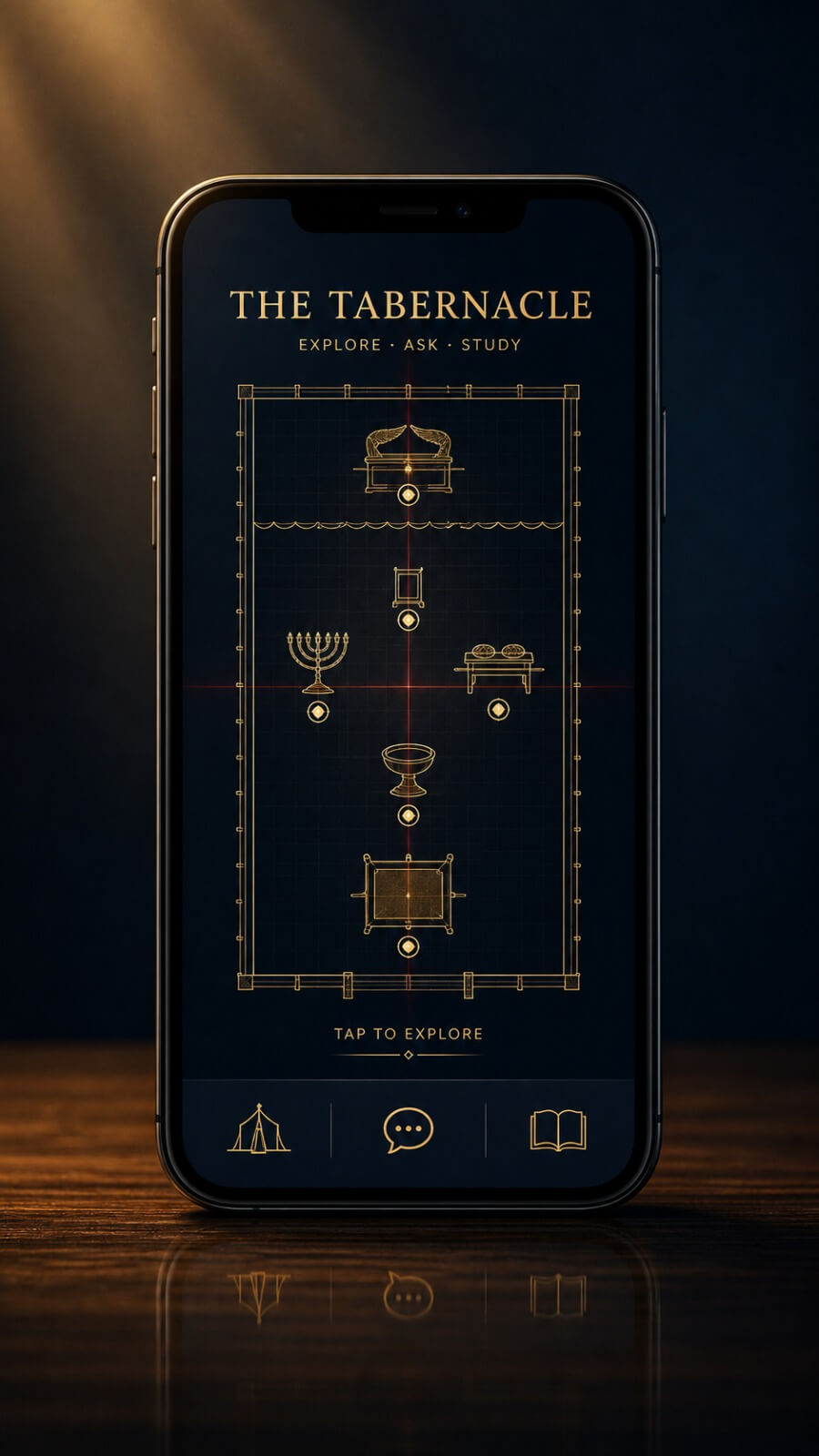
An interactive companion
for the books.
Walk through the Tabernacle on a screen. Ask the study assistant your deepest biblical questions. Lead a small group with structured guides drawn from the book. The application keeps the printed page at the centre — and lets you press deeper when you need to.
- Interactive Tabernacle — Explore the floor plan visually. Tap any piece of furniture for in-depth biblical detail.
- Custom-Trained Study Assistant — Ask questions in your own words. Receive answers grounded in Scripture and the books themselves.
- Interactive Study Guides — Structured guides for personal devotion, small groups and church-based discipleship.
Reflections from the path.
Why Every Bible Reader Eventually Hits the Same Wall
For many sincere readers, Exodus 25 is where the daily reading plan quietly dies. Here is why those chapters are actually the centre of it.
One Word, Three Locations: The Story of Zeela
One Hebrew word connects Adam’s side, the Tabernacle’s walls and the pierced side of Christ. The bride always comes from the side.
Salvation at the Gate. Redemption in the Tent.
Many Christians live their entire lives in the outer court without entering the tent. The map is in your hands.
Seven feasts. One pattern. One Christ.
The Lord’s appointed times in Leviticus 23 form the prophetic skeleton of redemptive history — four feasts fulfilled at Christ’s first coming, three still awaiting their fulfilment, and the present age of the Church standing in the gap between them.

We are here — the age of the Church
Two halves of the Christian life. One picture.
“Many believers live their entire Christian life in the Outer Court of salvation, never entering the Tent of redemption. The map has been in the Bible all along.”
— Drawn from Behold · The chapter on Salvation and Redemption
Walk the path with us.
Book One and Book Two are available now, in English and Afrikaans. Subscribe for new study guides, new journal entries, and early access when the application opens. No spam. One letter, sent when there is something worth sending.
Subscribe →